
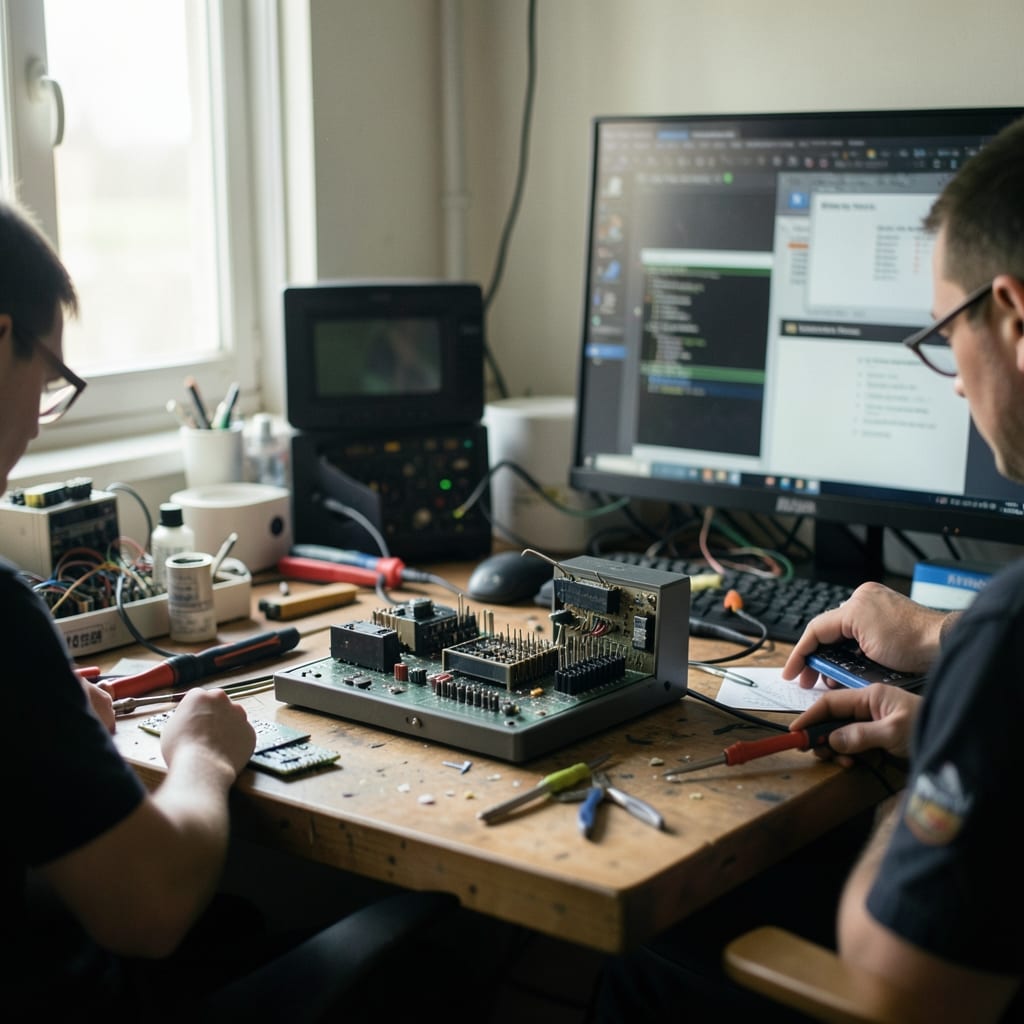
What this site is
Cell and Formula covers the tools, troubleshooting, and workflows that make computing *work*—no fluff, no marketing. We focus on the things that break, the shortcuts that save time, and the software/hardware that actually does what it promises.
This is for people who want to know *why* a command fails, not just how to copy-paste a fix. Whether you’re debugging a Windows update, optimizing Linux performance, or wrestling with a stubborn Office macro, we cut through the noise to what matters.
| What you will find here | What you will not |
|---|---|
| Terminal commands that actually work | Vague ‘try this’ advice |
| Hardware deep dives with benchmarks | Affiliate links disguised as reviews |
| Step-by-step troubleshooting guides | Tutorials that assume you’re a developer |
| Software comparisons with real-world tests | Clickbait headlines about ‘the next big thing’ |
Meet the cook

Lionel Radcliffe runs this site and writes most of the tutorials—he’s the one who still keeps a sticky note on his monitor with the command to reset a dead USB port.
A day in the life
- 15:40 a.m.
I’m in the basement, coffee mug in hand, staring at a script that *should* have worked last night. The error log is full of ‘permission denied’ messages, and I realize I forgot to run it as root. Again. The machine hums quietly, waiting for me to admit defeat—or fix it.
- 2Just after the school run
I’m at my desk, drafting a guide on Windows Registry edits, when my kid asks if I can ‘just show them how to do that thing again.’ I pause mid-sentence, realizing I’ve already written three paragraphs explaining something I do by muscle memory. The guide gets simpler.
- 3The hour before dinner
I’m testing a new Linux distro in a VM, and the installer crashes on ‘detecting hardware.’ I spend twenty minutes Googling, only to find the issue was a typo in the ISO filename. The machine boots fine after that—no need to file a bug report.
- 49:30 p.m.
I’m reviewing a hardware teardown, and the photos are blurry because my phone’s flash kept triggering the laptop’s sleep mode. The third attempt works, but now I’ve got a half-empty energy drink and a sore thumb from propping the camera against the desk.
- 5Midnight (because of course)
I’m finally done editing a troubleshooting guide—just as the power flickers. The screen glitches, and I lose an unsaved draft. The backup kicks in, but I spend the next ten minutes muttering about UPS units and why I don’t have one.
I keep a list of commands that saved me time this week. I say ‘debugging is just reading the error message carefully’ out loud, even when no one’s listening. And I refuse to buy a ‘premium’ support tool that’s just a repackaged open-source script with a $50 price tag.
The rules we hold ourselves to
These aren’t promises—they’re the things we’d rather fail at than bend.
A command without context is just a line of text. We include the theory behind the fix—so you know what to do when the next error pops up.
Patching a symptom instead of the root cause saves time now but costs it later. If a guide doesn’t address *why* something broke, we rewrite it—or scrap it.
What we still get wrong
We’re still bad at covering niche hardware—like older Macs or industrial PCs—because most of us work with consumer-grade gear. We’re fixing that by crowdsourcing testers with specialized setups, but it’s slow going.
Our Linux guides lean too hard on Ubuntu/Debian. We’re adding a ‘distro-agnostic’ tag to every tutorial and a monthly deep dive into alternatives, but old habits die hard.
How to reach us
We love hearing about the commands you wish existed, the hardware hacks that worked, or the software quirks you’ve figured out. If you’ve got a tip or a fix to share, the contact page is the place to send it.
The guides are grouped by category: App, Coding, Hardware, Operating System, Outlook and PowerPoint.